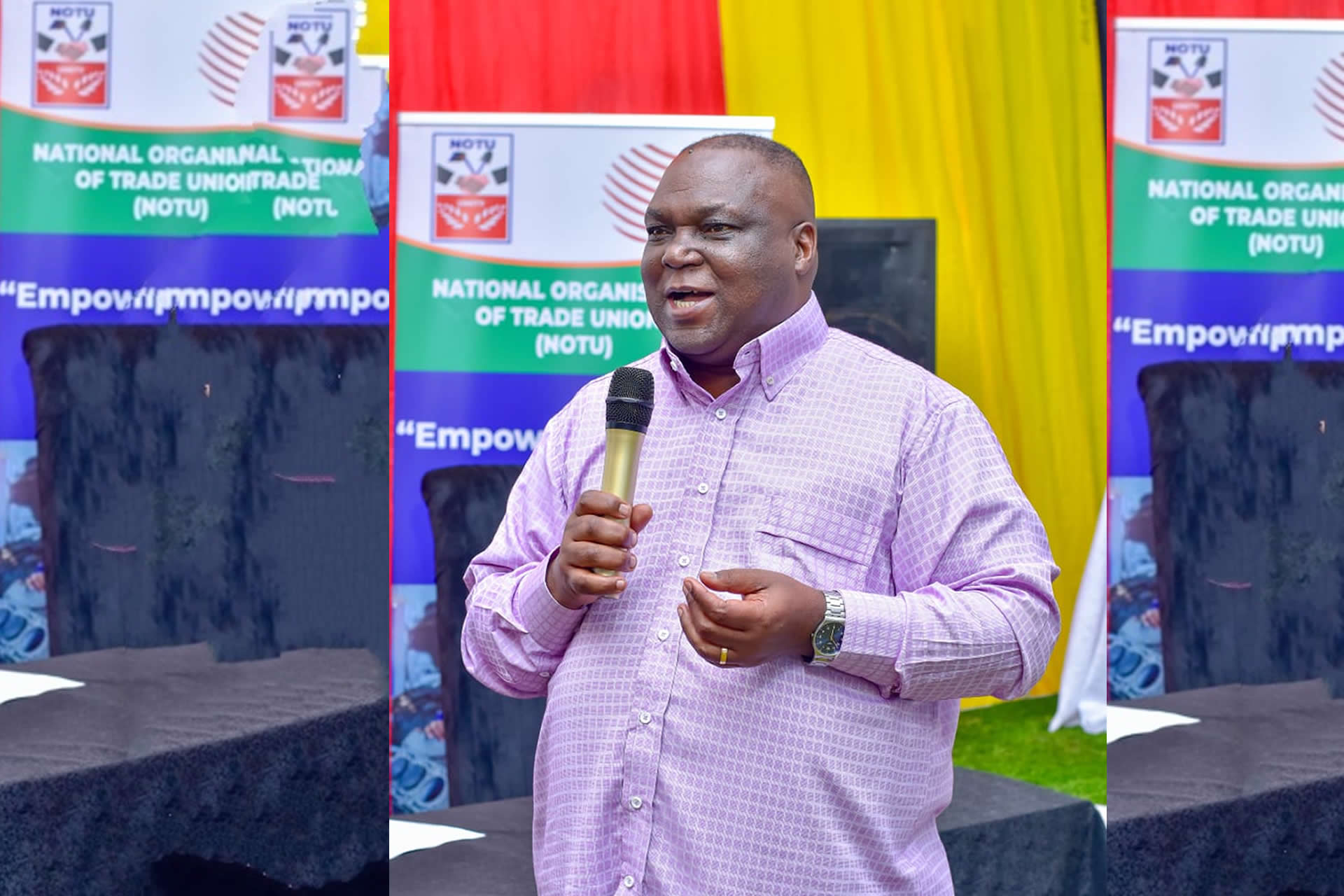
The National Organization of Trade Unions (NOTU) has embarked on a new phase of leadership empowerment with support from the Federatie Nederlandse Vakbeweging (FNV), the Dutch Trade Union Confederation. The training, held in Kampala, focused on equipping NOTU leaders with knowledge and skills in the Theory of Change (ToC), a strategic approach aimed at strengthening the effectiveness, accountability, and sustainability of trade union activities in Uganda.
The multi-day workshop brought together leaders from NOTU’s affiliate unions across various sectors, including education, health, transport, and manufacturing. Facilitated by experts from FNV, the training emphasized the importance of strategic planning, evidence-based advocacy, and result-oriented leadership in advancing workers’ rights.
According to the facilitators, the Theory of Change approach helps organizations define how specific actions can lead to long-term impact. For NOTU, this framework provides a clearer roadmap for achieving stronger unions, fairer labor policies, and improved working conditions for Ugandan workers.
Speaking during the training, NOTU Secretary General Christopher Werikhe applauded FNV for its continued partnership and support in building the capacity of Ugandan trade union leaders. He noted that the training comes at a crucial time when unions are navigating emerging challenges such as job insecurity, digital transformation, and the changing nature of work.
“This training will help us re-examine our strategies, understand our collective goals, and ensure that our actions produce measurable impact in the lives of workers,” Werikhe said. “The Theory of Change will help us align our advocacy with clear outcomes and strengthen accountability across all levels of the movement.”
The sessions covered key areas such as stakeholder mapping, problem analysis, gender inclusion, and the role of unions in promoting social dialogue. Participants also engaged in practical exercises designed to help them identify challenges within their respective unions and propose realistic, results-based solutions.
Representatives from FNV emphasized that effective trade unionism requires more than passion; it requires strategy, collaboration, and long-term vision. They commended NOTU’s commitment to internal growth and encouraged leaders to continue empowering members at the grassroots level.
“Strong unions are built from within,” noted an FNV representative. “By understanding how change happens and planning strategically, leaders can ensure that every effort contributes to a fairer and more equitable labor environment.”
At the end of the training, participants developed action plans to integrate the Theory of Change model into their union programs and policy advocacy work. NOTU leadership reaffirmed its dedication to promoting decent work, equality, and social justice for all Ugandan workers.
The partnership between FNV and NOTU continues to serve as a model of international solidarity, showcasing how collaboration between global labor movements can strengthen the fight for workers’ rights and sustainable economic development.