The National Organisation of Trade Unions (NOTU) has urged Ugandans working abroad to register with Ugandan embassies in their respective host countries to enable quicker response to distress situations and improve their safety.
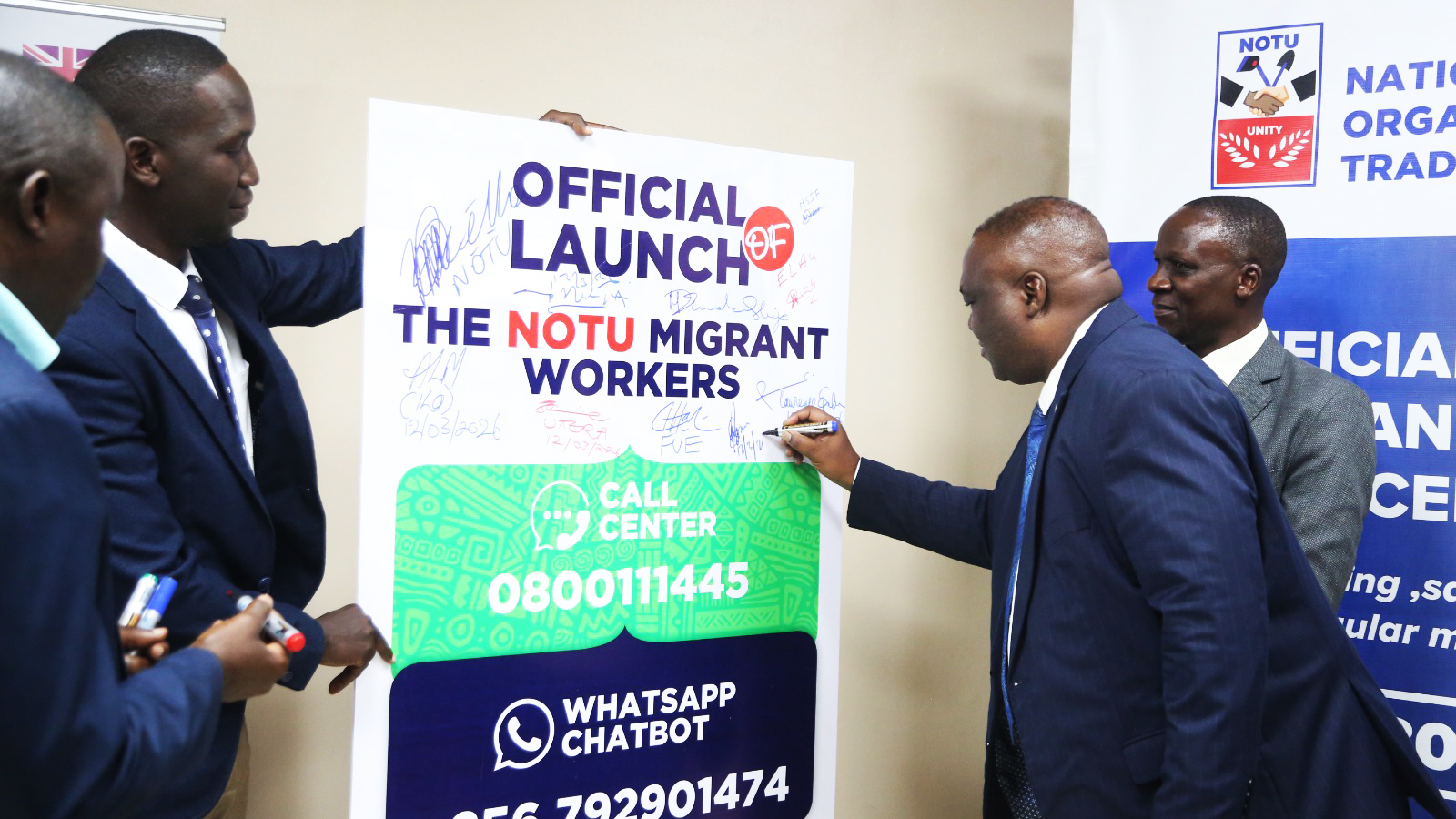
The call was made during the official launch of the NOTU Migrant Workers Toll-Free Call Centre and WhatsApp Chatbox at Hotel Africana on Thursday.
Speaking at the launch, Lawrence Egulu, Commissioner for Employment Services at the Ministry of Gender, Labour and Social Development, said registration with embassies helps the government keep track of Ugandan citizens abroad and respond quickly when they face challenges.
“The most important thing we advise our citizens abroad is to register with the embassy wherever they are. Even if someone travelled through irregular means, it helps when the government knows where they are so that we can respond when they get into distress,” Egulu said.
The call follows growing concern over the welfare of Ugandans working overseas. Last month, a Ugandan domestic worker in Syria, Vicky Ajok, was arrested after confessing to killing her 87-year-old employer, Shaarawi. In a video circulated on social media, Ajok alleged that she had suffered prolonged abuse, including being beaten, denied food, and threatened with poisoning, in addition to unpaid wages.
Egulu noted that the government wants Ugandans to seek employment abroad out of choice rather than desperation.
“Our role is to ensure that wherever they are working, their rights are respected and they know where to turn when they need help,” he said.
According to Egulu, youth unemployment, currently estimated at 17 per cent—has pushed many Ugandans to search for employment opportunities abroad, making it necessary to promote safe and regular migration channels.
During the event, Musa Okello, Chairman General of the National Organisation of Trade Unions, said the new call centre aims to support migrant workers facing abuse or exploitation.
Through the toll-free call centre and WhatsApp chatbox, Ugandans working overseas will be able to report abuse, seek advice, and connect with authorities both in Uganda and in their host countries.
Okello noted that while many Ugandans travel abroad through official labour export channels, others migrate through irregular arrangements that expose them to exploitation.
“Even those who travel legally sometimes fall victim to conmen who promise them better opportunities and convince them to leave their official employers. When that happens, they lose their legal status and become undocumented workers in those countries, which places them in a very difficult situation,” he said.
He also expressed concern about Ugandan workers in the Middle East amid the ongoing tensions between Iran, Israel, and the United States, noting that unconfirmed reports suggest that four Ugandan domestic workers may have died since the escalation.
About the call centre
Okello explained that through the new platform, distressed migrant workers will be able to contact union officials directly.
“Through the call centre, distressed workers will be able to reach union officials directly. From there, the union will coordinate with government institutions, including the Ministry of Gender, Labour and Social Development, the Ministry of Internal Affairs, the Ministry of Foreign Affairs, and the police to ensure assistance,” he said.
The platform is expected to strengthen coordination between the workers’ union, government institutions, and migrant workers abroad, enabling quicker response to emergencies and helping prevent abuse.